

A small backyard can still produce a serious amount of fruit. A single apple on the right rootstock will give you more than you can eat from a patch of lawn the size of a dining table, and a fig in a pot will crop for years on a sunny patio. The trap is buying by variety name alone — the photo of glossy cherries, the romantic old apple — because the label hides the details that decide whether the tree fits.
Four things matter more than anything printed in large type: the rootstock, the mature size, the pollination requirement and the climate it was bred for. Read those before you hand over any money, and most of the mistakes people make in their first orchard simply disappear.
Look at the ground before you look at a catalogue
Spend an afternoon in the spot you have in mind. Fruit trees want sun — six hours of direct light at minimum, and more is better for stone fruit. Watch where shadows fall at midday and again in late afternoon, because a tree that is shaded on one side will grow lopsided and fruit poorly on that side.
Then check drainage, which is the quiet killer of young trees. Dig a hole about 30 cm deep, fill it with water and see how long it takes to disappear. A few hours is fine. If water is still standing the next morning, you have a poorly drained site, and you should either plant on a raised mound, improve the soil with grit and organic matter, or choose a container instead. Fruit trees hate wet roots far more than they hate dry ones.
Also note the small things: the bottom of a slope is a frost pocket in spring and can strip blossom off a plum overnight; a south-facing wall gives you reflected heat and a microclimate worth a whole hardiness zone; a spot beside a path will be brushed by passers-by, so keep branches above head height. If you are in a town, check whether the tree will eventually shade a neighbour's window.
Rootstock is the number that decides everything
A fruit tree is two plants joined together. The top part, the scion, is the variety whose fruit you want. The bottom part is the rootstock, and it controls how big the tree becomes, how quickly it starts cropping, how well it anchors in wind, and how tolerant it is of heavy or poor soil. The same apple variety on two different rootstocks is effectively two different trees.
This is where beginners get caught. Nurseries sell cheap, vigorous trees because they are easy to produce, and they look impressive in the pot. Three years later they are a four-metre monster in a garden that had room for two metres.
Common rootstocks you will meet
- Apples: M27 and M9 are dwarfing — roughly 2 to 3 metres, early to crop, but they need staking for life and good soil. M26 is a sensible middle ground at 3 to 3.5 metres. MM106 and M25 are vigorous and only make sense if you genuinely want a big tree.
- Pears: Quince C keeps pears small and productive; Quince A is a little stronger. Not every pear variety is compatible with quince, so ask the nursery to confirm the pairing.
- Cherries: Gisela 5 is the dwarfing choice for gardens; Colt and Mazzard grow into substantial trees. Sweet cherries on vigorous roots are not a small-garden plant.
- Plums: Pixy is dwarfing and crops young; St Julian A is semi-vigorous and more forgiving on heavier soil.
- Figs and citrus: often grown on their own roots or on dwarfing citrus rootstocks, and both are happiest in containers where you can control size and move them out of frost.
Mature size and spacing, read honestly
The spread on the label is usually the size of an unpruned tree after ten or fifteen years. You can keep a tree smaller with summer pruning and training, but you cannot turn an MM106 apple into an M9 by wishing it. Pick a rootstock whose natural size is already close to what you want, then use pruning for refinement rather than rescue.
As a rule, leave at least half the mature spread as clearance between your tree and a fence, a shed or a second tree. Planting two metres apart and hoping for the best gives you two trees fighting for light, water and nutrients, and neither will crop well. If you have a very tight space, consider a fan or espalier trained against a wall — the same tree, flattened onto a plane — or grow a dwarf tree in a 40 to 50 litre pot, which also lets you move it in a cold snap.
Pollination: who needs a partner
Many fruit trees are self-sterile, meaning pollen from the same variety will not set fruit, and some are even self-incompatible within a wider group. Apples are the classic case. Most need a different variety that flowers at the same time, which is why catalogues list pollination groups from A to F. Two varieties in the same group, or in adjacent groups, will usually overlap enough for bees to do the work.
Watch for triploids such as Bramley's Seedling, Jonagold and Mutsu: they need a partner but produce very little viable pollen themselves, so you effectively need two other varieties nearby. Pears mostly need a partner too, though a few such as Conference set reasonable crops alone. Sweet cherries need cross-pollination unless you choose a self-fertile variety like Stella, Lapins or Sunburst. Plums vary — Victoria is partly self-fertile, while most Japanese plums want company. Peaches, nectarines, figs, quince and most citrus are self-fertile and will crop on their own.
If you have room for one tree only, buy a self-fertile variety or a "family tree" with several varieties grafted onto one trunk. Nearby trees in neighbouring gardens can help, but do not count on them: bees may not visit your tree if a better source is closer, and your neighbour may prune or remove theirs.
Climate suitability and chill hours
Fruit trees need a certain number of cold winter hours to break dormancy properly and flower evenly. This is measured roughly as chill hours below about 7°C, and it varies enormously between varieties. A classic English cooking apple may want well over a thousand hours; low-chill apples such as Anna or Dorsett Golden are bred for mild winters. Plant a high-chill variety in a warm coastal garden and you get sparse, late, erratic blossom.
The opposite problem is spring frost. Early-flowering apricots and Japanese plums can be caught by a late frost and lose the year's crop in one night, so avoid frost pockets and consider a sheltered, south-facing wall, which brings blossom on earlier but also protects it.
The most reliable guide is local knowledge. Ask at a good independent nursery, an allotment society or a community orchard what actually crops well within a few miles of you. A variety that performs two hundred kilometres away may sulk in your soil and your particular spring.
A short checklist before you buy
- Confirm the rootstock by name, and the mature height and spread it implies.
- Check the pollination group and whether the variety is self-fertile or a triploid.
- Ask about chill hours or, better, whether the variety is known to crop locally.
- Decide between bare-root, bought in the dormant season and cheaper to establish, and pot-grown, which you can plant almost any time.
- Look at the graft union: it should be clean and low, and it must sit above the final soil level.
Buy fewer trees, and buy them properly
Two well-chosen trees will give you more satisfaction — and more fruit — than five impulse buys squeezed into a border. Choose varieties you will actually eat, match the rootstock to the space you have rather than the space you dream of, and check the pollination pairing before you leave the nursery. Plant in autumn or early winter if you can, stake properly, mulch without burying the trunk, and water generously through the first two summers while the roots establish. After that, the tree has read the same label you did, and it will stay the size it promised.
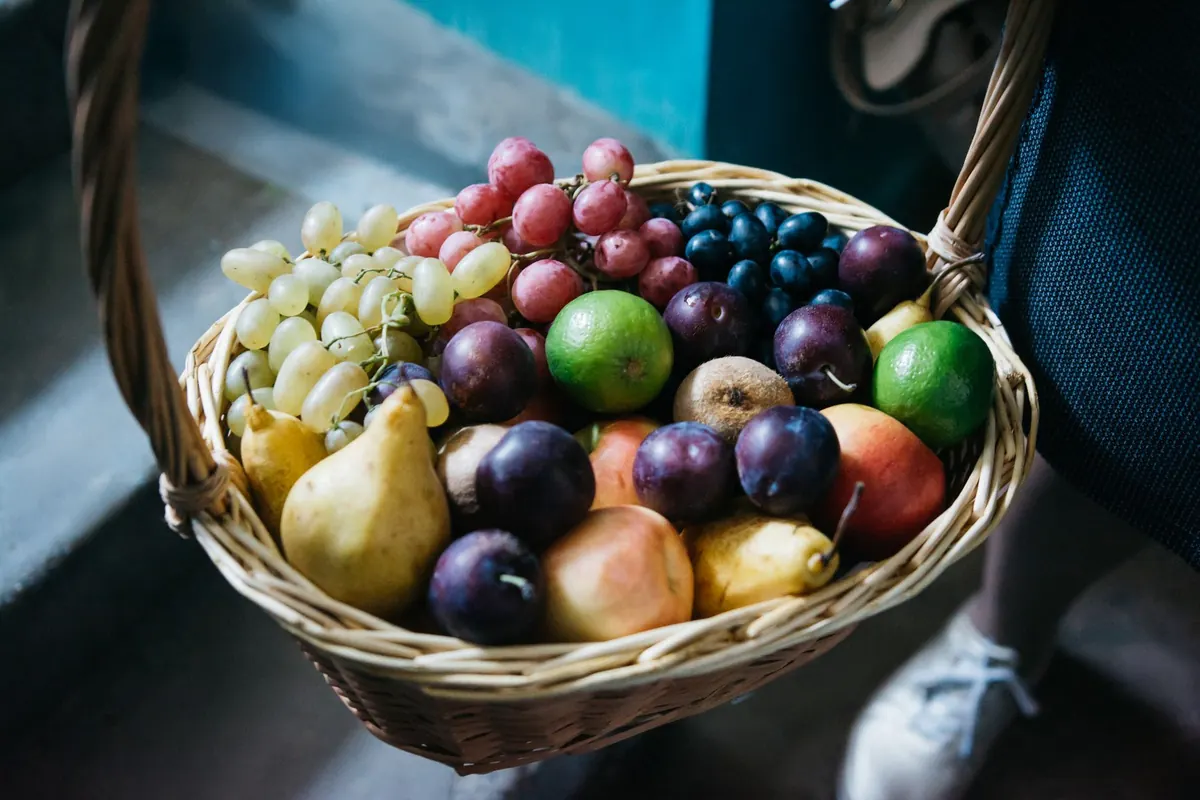
Photo: Beto_MdP / Pixabay